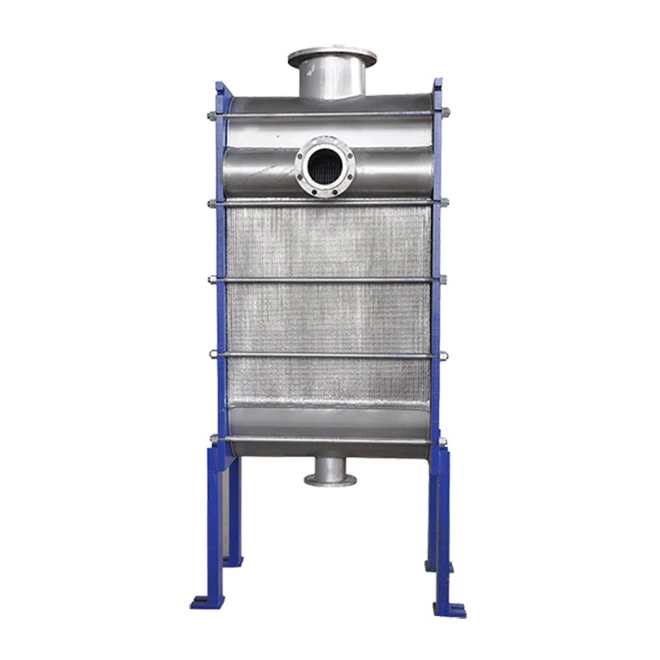
Yes, plate heat exchangers are pressure vessels.
Structure and Principle of Plate Heat Exchangers Plate heat exchangers are common heat exchange equipment widely used in chemical, petroleum, and pharmaceutical industries. Their structure consists of a set of plates and a shell. The plates are made of metal, while the shell is a closed container, also made of metal. Different media flow within the space between the plates and the shell, achieving heat transfer.
This type of heat exchanger has high heat transfer efficiency, a small footprint, and high safety, thus its widespread application. However, because the media may generate high pressure and temperature during flow, the plate heat exchanger becomes a pressure vessel.
Are Plate Heat Exchangers Pressure Vessels? According to the national standard "Design Code for Pressure Vessels," a pressure vessel refers to a solid or liquid container whose volume changes very little under pressure. This includes various pipes, containers, and shells, as well as pipes and fittings inside or connected to the container. In plate and shell heat exchangers, the medium experiences relatively high pressure and temperature during flow, inevitably involving the issue of pressure vessels.
Therefore, it can be concluded that plate and shell heat exchangers are pressure vessels.
Safety of Plate and Shell Heat Exchangers As a pressure vessel, the safety of plate and shell heat exchangers is paramount. Malfunctions during use or maintenance could lead to accidents.
Therefore, when using plate and shell heat exchangers, it is crucial to strictly adhere to safety regulations and operating procedures, conduct regular inspections and maintenance, and promptly identify and resolve problems to ensure their safe and reliable operation.